Community Development
Stronger Towns: Bridging the Gap Between Cities and Local Business

In February, our team hosted a Business Appreciation Event for the City of Sandy. Our goal was to celebrate the local business community and better connect business owners with opportunities for funding, training, and support. The evening provided a critical meeting ground where representatives from the city could directly engage with entrepreneurs and understand the dynamics of their local business ecosystem.
Events like these are more important than ever; local businesses are the backbone of cities, strengthening civic identity, providing jobs, and activating main streets, yet they are often among the least supported actors in municipal systems. Municipalities may unintentionally overlook the importance of local businesses or lack the capacity to provide them with the necessary support. On the other hand, entrepreneurs may feel isolated from local governments that are misaligned with their day-to-day needs and operational realities.
This disconnect threatens to enforce a negative feedback loop where business owners disengage from civic processes and public authorities lose critical insight into their local economies. If left unchecked, municipalities become increasingly vulnerable to fluctuations in market conditions or demographic changes, placing their long-term health and vitality at risk.
Recently, national research from Main Street America’s Equitable Entrepreneurial Ecosystems (E3) initiative explored this disconnect and identified several lessons that enable local businesses to thrive. This blog post highlights three of these lessons and explores their implications for cities that want to see their entrepreneurs flourish.

1 - Direct, Personal Engagement
The E3 Initiative found that entrepreneurs experienced more sustained success when they had access to one-on-one support. Personal connection is essential to ensuring that assistance is customized, thoughtful, and reliable. It allows for case-specific and long-term training programs that increase financial literacy, improve branding and marketing, strengthen administrative systems, or support responsible scaling.
Direct engagement also builds trust between business owners and municipal leaders. Rather than assuming what entrepreneurs need, cities that prioritize listening sessions, focus groups, and personalized outreach are better positioned to provide meaningful support. This finding reinforces the importance of intentionally bridging the gap between the business ecosystem and city leadership.
2 - Speed of Trust and Consistency
Entrepreneurs are not a homogeneous group; they offer a diverse range of backgrounds, commitments, and aspirations. Resources designed to support them must reflect that diversity. Without flexibility in training schedules, delivery methods, or communication channels, well-intentioned programs may inadvertently exclude the very individuals they aim to help.
The E3 Initiative emphasizes operating at the “speed of trust”, an approach that prioritizes genuine relationships, consistent communication, and a commitment to understanding individual needs. Flexible scheduling, varied learning formats, and ongoing engagement all contribute to stronger participation and more durable outcomes. Trust, once established, transforms knowledge into action and ideas into tangible successes.
3 - Tailored Supportive Spaces
It is tempting to replicate business support models that have succeeded elsewhere. However, the E3 Initiative makes clear that supportive spaces are not one-size-fits-all. Each community has its own demographic composition, market conditions, and entrepreneurial culture.
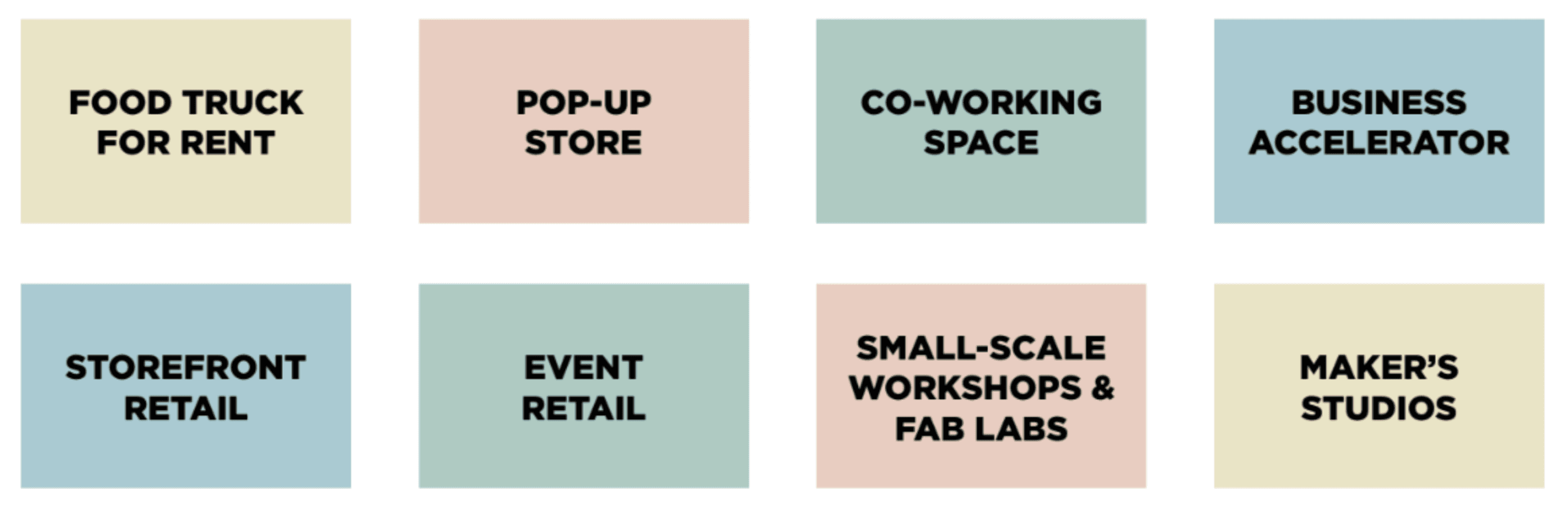
Cities should collaborate closely with local entrepreneurs to design spaces and programs that reflect local realities. Creative solutions such as food trucks, pop-ups, makers’ markets, or shared retail spaces can complement traditional approaches like incubators and accelerators. In some cases, virtual networks or mentorship programs may be more impactful than a physical facility. The key is reflexivity rather than replication.
Bridging the Gap
The disconnect between businesses and municipalities is partially a structural issue. City staff are tasked with a variety of other projects, often with lean teams and constrained resources. Economic development, particularly small business ecosystem development, becomes one priority among many. Relationship-building requires time. Technical assistance requires expertise. Strategic facilitation requires training. And sustained implementation requires bandwidth.
The strategies outlined above offer a pathway to help bridge the gap. When applied thoughtfully, they can support the growth of healthy and resilient entrepreneurial ecosystems that uplift the community as a whole. In many cases, municipalities need dedicated capacity and specialized expertise to accomplish these goals. However, a commitment to small businesses is critical in a time of growing economic uncertainty and demographic shifts. With the right framework, the right partnerships, and a commitment to collaboration, municipalities can transform disconnection into alignment and build resilience.
For communities ready to take that next step, thoughtful guidance and experienced facilitation can make the difference between isolated efforts and a truly thriving entrepreneurial ecosystem. If you’re looking for support while you take these steps, consider reaching out to HSC for tailored urban planning and economic development solutions.